

Artificial intelligence is becoming a bigger part of travel planning. According to Allianz Partners, 45% of travelers globally planned to use AI to help organize their vacations this summer.
And now Google is taking things one step further.
Google recently introduced hotel booking in AI Mode in Search, meaning travelers can go from exploring hotels based on their preferences to comparing options and actually making a reservation in what Google calls “one seamless conversation.”
It’s quite a big deal, really. Especially when you consider that travelers aren’t only asking AI where to go anymore. Increasingly, the booking itself could become part of that same conversation.
So, how does it really work and what might that mean for independent hosts?
Booking a hotel in AI Mode — from finding to checkout
“I’m traveling to New York September 26–29 and want a hotel under $200. Make it close to cozy jazz bars in the area.”
That’s the kind of request travelers can give Google’s AI Mode. Rather than making several searches and opening tab after tab, they can describe what they’re looking for in normal language.
AI Mode then presents a visual list of hotels based on those preferences, including reviews and useful information for comparing them.
Once a traveler chooses a hotel, the new part begins.
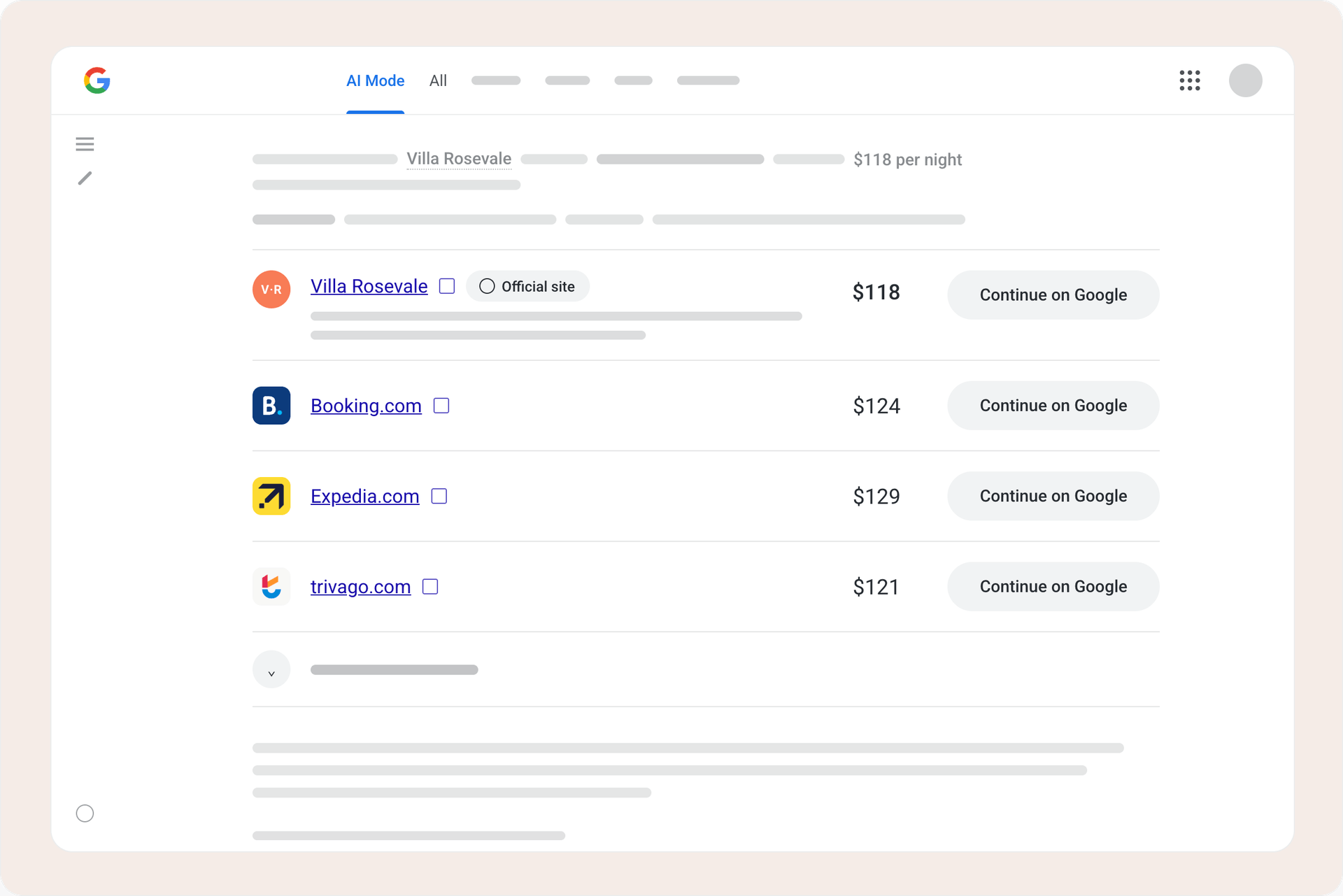
Where available, they can select “Continue on Google” from an integrated booking partner, choose a room, check details such as the cancellation policy and complete their reservation with Google Pay — without leaving the AI Mode booking flow.
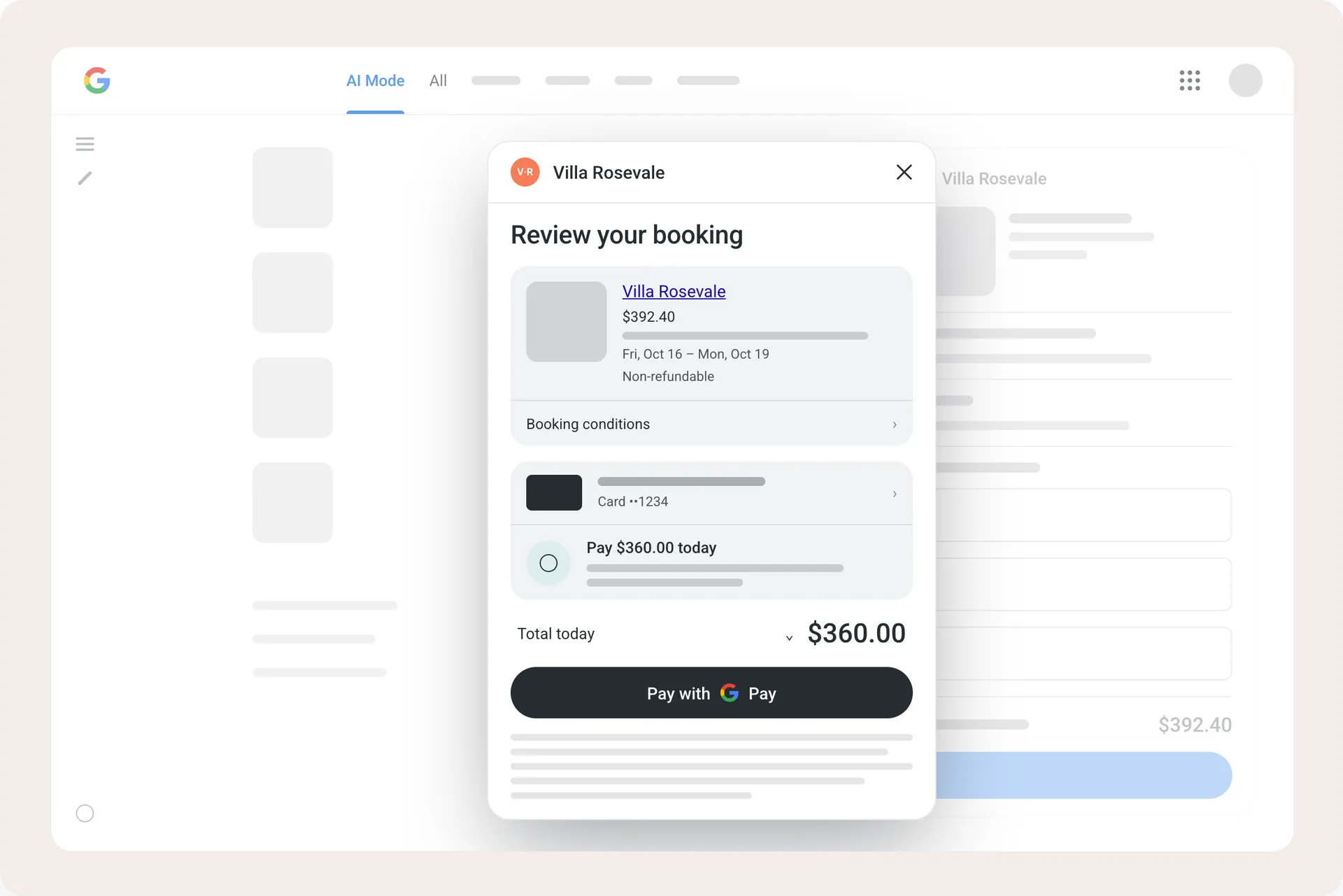
The hotel or booking platform still handles the actual booking as the merchant of record, as well as any customer service afterwards.
Google is initially rolling the feature out in English in the U.S. with 10 partners, including hotel groups such as Hilton, Marriott and IHG, alongside Booking.com, Expedia, Hotels.com, Priceline and Trip.com.
What can independent hosts do now?
Google’s update is still new, so there’s no need to suddenly rethink your entire booking strategy. But it does give us a useful glimpse at where travel search may be heading.
And there are a few practical things worth checking already.
Discovery: get specific and stand out
First, make it easy to understand what your property actually offers.
Keep your website and Google Business Profile current and describe your property clearly. Where are you? What makes the stay different? Which amenities do you offer? What’s nearby?
That becomes especially useful when someone searches with specific preferences rather than simply typing “hotels in New York.”
And there isn’t a special trick for getting into Google’s AI results. Google says the same good SEO practices still apply to AI Mode: useful, original content and information that its search systems can find and understand.
Comparing: reviews matter
Next comes the comparison.
Google says its hotel suggestions can include guest reviews alongside other factors travelers may want to compare. So keeping your property details, photos and prices current matters, but your guests can do plenty of the talking for you too.
Good, recent reviews may help give someone another reason to choose your property when several similar options appear side by side.
Booking: keep an eye on your distribution
Then there’s the booking itself.
Google’s first partners include several major OTAs such as Booking.com and Expedia. That doesn’t mean every independent property suddenly needs to change where it sells its rooms.
But it does make your distribution mix worth watching.
If AI tools increasingly become somewhere guests both discover and book accommodation, being available through the channels those tools connect with could become another consideration alongside your direct bookings.
From AI travel planning to AI booking
AI helping someone plan a vacation isn’t particularly unusual anymore. What’s interesting about Google’s update is how much closer planning and booking are becoming.
For independent hosts, it’s too early to know exactly how much this will change guest behavior or distribution.
But the direction is worth paying attention to.
So the next time a guest tells you they found — and booked — your room through an AI conversation, perhaps don’t be too surprised.
Enjoyed this article?
Follow Sirvoy for practical tips, product news and fresh ideas to help your property get more bookings.